
You’re mid-call when it happens, a shrill screech or that irritating double-talk effect. Your microphone picks up sound directly from your desktop speakers, creating an endless loop that drives everyone in the meeting crazy.
Microphone echo from speakers occurs when your microphone captures audio output from your speakers and re-transmits it, creating an acoustic feedback loop. The primary causes include excessive speaker volume, poor mic-to-speaker positioning (especially when placed face-to-face), high microphone gain settings, and inadequate acoustic echo cancellation (AEC) in your audio chain. Most echo issues resolve by repositioning your cardioid microphone off-axis from speakers, reducing speaker volume by 30–40%, lowering mic gain to the minimum effective level, and enabling software-based echo suppression in your operating system or conferencing application.
This guide walks you through the acoustic principles behind speaker-mic feedback and delivers practical fixes you can carry out in minutes, no audio engineering degree required.
Key Takeaways
- Microphone echo from speakers occurs when your mic captures audio output and re-transmits it in an endless acoustic feedback loop, solved by repositioning your cardioid microphone away from speakers and reducing speaker volume by 30–40%.
- Position your microphone 18–24 inches from your mouth and angle its rear (null zone) toward speakers to exploit the cardioid pattern’s natural sound rejection capabilities.
- Lower microphone gain to the minimum level that captures your voice clearly (peaking around -12 to -6 dB) and reduce speaker output simultaneously to eliminate feedback without sacrificing call quality.
- Enable built-in acoustic echo cancellation in your operating system (Windows Enhancements tab or macOS ambient noise reduction) and video conferencing apps like Zoom, Teams, or Google Meet for layered protection against echo.
- Switch to headphones or upgrade to a supercardioid microphone as a hardware solution when software and positioning fixes fail to eliminate persistent microphone echo from speakers.
- Upgrade to a dedicated audio interface with DSP processing and implement a hardware noise gate to control speaker bleed during pauses, especially for gaming, streaming, or podcast setups.
What Causes Microphone Echo From Speakers?
The Audio Feedback Loop Explained
When your microphone captures sound from your speakers, it sends that audio back through your system. The speakers play it again, the mic picks it up again, and the cycle repeats. Each iteration amplifies the signal until you hear that piercing feedback howl or annoying echo.
This happens because your microphone can’t distinguish between your voice and speaker output. Desktop speakers project sound omnidirectionally across your workspace. If your mic sits within that sound field with sufficient gain, it becomes an unintentional speaker monitor. The delay between original sound and its re-capture creates the characteristic echo effect you and your call participants hear.
The feedback gain threshold determines when this loop becomes audible. When combined speaker output level and microphone sensitivity exceed this threshold, feedback occurs. Room acoustics amplify the problem, hard surfaces like bare desks and walls reflect sound waves directly back into your mic capsule.
Common Scenarios That Trigger Echo
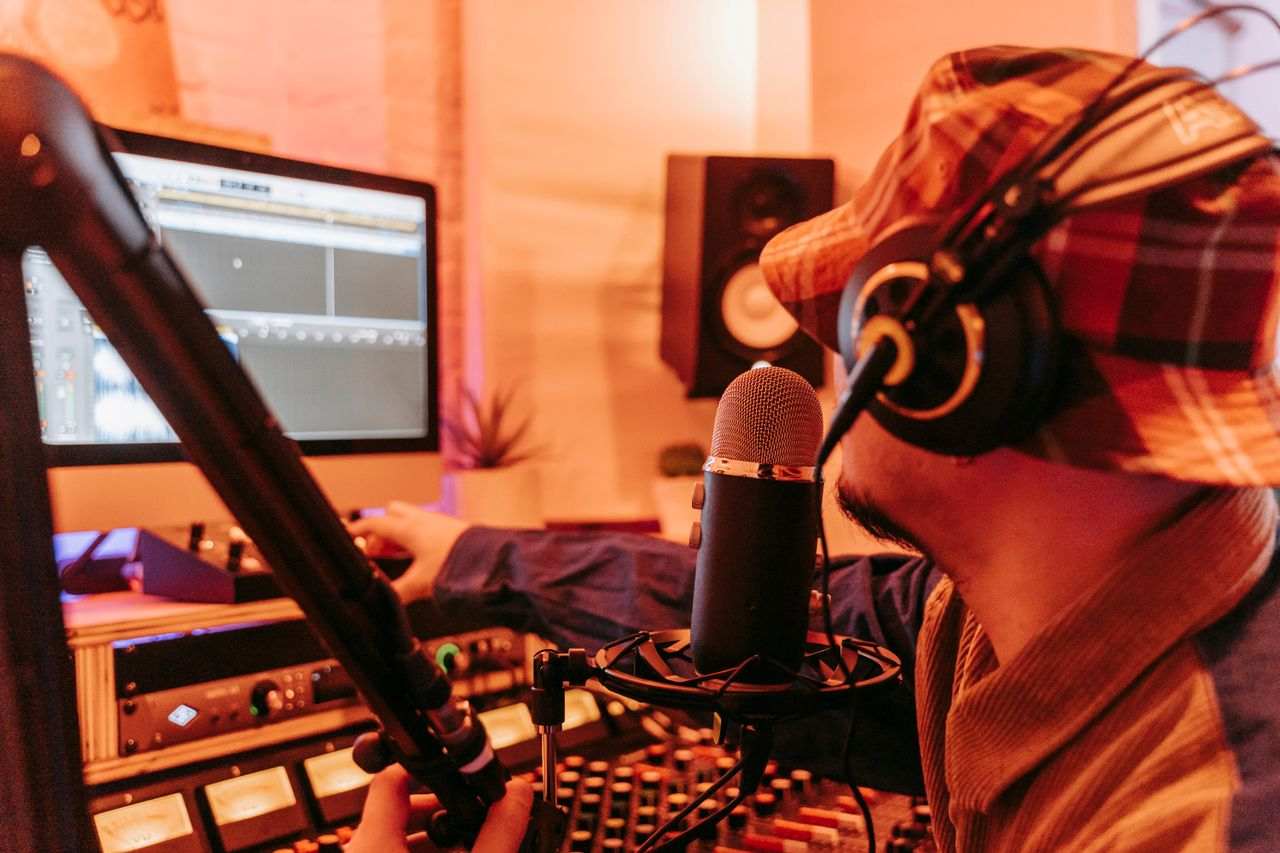
Gaming setups cause frequent echo problems. You position desktop speakers flanking your monitor with a condenser mic mounted on a boom arm between them. When game audio or Discord voice chat plays through speakers, your mic broadcasts it back to your teammates.
Home office video calls create similar issues. You place your USB microphone 12 inches from your keyboard with computer speakers 18 inches away on your desk. When colleagues speak, their voices play through your speakers, your mic captures it, and they hear themselves with a 200–400ms delay.
Podcast recording with monitor speakers presents another challenge. You run playback through desktop monitors while recording your voice. The mic picks up both your voice and the backing track from speakers, creating a muddy, doubled audio file that’s nearly impossible to salvage in post-production.
How to Identify the Type of Echo You’re Experiencing
Two distinct echo types affect speaker-mic setups. Acoustic echo occurs when your microphone physically captures speaker output through the air. You’ll hear a delayed repetition of speech, typically 100–500ms behind the original. This type relates directly to room acoustics and equipment positioning.
Electrical echo results from signal routing issues within your audio interface or system. It manifests as a shorter delay (under 50ms) and often includes a metallic quality. Check your audio routing and monitoring settings if you experience this type.
Test your setup with this method: Play a YouTube video through your speakers at normal volume. Start a recording in Audacity or your system’s voice recorder. Speak clearly, then stop speaking while the video continues. Play back the recording. If you hear the video audio mixed with your voice, you’ve confirmed acoustic echo from speakers.
“My desk mic kept picking up my desktop speakers during Zoom calls. Switched to a cardioid pattern and aimed it away from the monitors, problem solved instantly.” via r/audio
Your call participants provide another diagnostic tool. Ask if they hear their own voice delayed when they speak. If yes, your speakers are feeding back into your mic. If they hear echo only when you speak, the problem originates from their setup, not yours.
Immediate Solutions to Stop Microphone Echo
Adjust Your Microphone and Speaker Placement
Cardioid microphones reject sound from the rear by 15–25 dB compared to front-facing sound. Position your mic so its rear (typically marked with a logo or model name on the front) faces your speakers. This exploits the polar pattern’s null zone.
Calculate safe distance using the inverse square law: doubling the distance between mic and speakers reduces captured volume by 6 dB. If your mic sits 8 inches from speakers, move it to 16 inches for significant echo reduction. Position speakers behind your monitor or to the sides at 45-degree angles, never directly facing your microphone.
Create physical barriers between speakers and mic. Stack books, position your monitor between them, or use a desktop divider. Even a 12-inch barrier disrupts direct sound paths. For gaming setups, angle speakers 30 degrees outward so sound projects past your mic position rather than directly at it.
Reduce Speaker Volume and Microphone Sensitivity
Lower your speaker output by 30–40% from current levels. Most echo problems disappear when you reduce the acoustic energy in your workspace. Pair this with increasing your system’s master output or application volume to maintain comfortable listening levels without overdriving speakers.
Drop your microphone gain to the minimum level that still captures your voice clearly. Open your system sound settings and speak at normal volume. Adjust input sensitivity until the meter peaks around -12 to -6 dB. Higher gain settings amplify both your voice and ambient speaker sound.
Test the optimal ratio: Set speaker volume to 40% of maximum and mic gain to 50–60%. Speak at normal volume and have a friend confirm audio quality on a test call. Incrementally adjust from this baseline until echo disappears while maintaining clear voice transmission.
Software Settings to Eliminate Echo on Different Platforms
Windows Echo Cancellation Settings
Windows includes built-in acoustic echo cancellation you should enable. Navigate to Settings > System > Sound > Device Properties under your microphone. Click “Additional device properties,” then the “Enhancements” tab. Check “Acoustic Echo Cancellation” and “Noise Suppression.”
For stubborn issues, install Driver Booster to update your audio drivers. Outdated Realtek or motherboard audio drivers lack modern AEC algorithms. Updated drivers from 2025–2026 include significantly improved echo cancellation processing.
Mac Audio Configuration for Echo Prevention
Mac systems handle AEC automatically in FaceTime and native apps, but third-party applications require manual configuration. Open System Settings > Sound > Input, then enable “Use ambient noise reduction.” This activates Apple’s audio processing algorithms.
MacOS Sonoma and later include enhanced voice isolation. During calls in supported apps, open Control Center and select “Voice Isolation” under Mic Mode. This aggressive filtering reduces speaker bleed by processing only frequencies within human speech range (300–3400 Hz).
Video Conferencing App Settings (Zoom, Teams, Google Meet)
Zoom provides robust echo cancellation. Navigate to Settings > Audio and enable “Automatically adjust microphone volume” and “Suppress background noise.” Set suppression to “High” for speaker-heavy environments. Zoom’s AEC works best when you also enable “Original Sound” for natural processing.
Microsoft Teams offers similar controls. Go to Settings > Devices and enable “Noise suppression” with the “High” setting. Teams automatically enables echo cancellation, but you can verify it under Audio devices > Device settings.
Google Meet handles echo cancellation server-side but struggles with extreme cases. Ensure your browser (Chrome recommended) has microphone permissions set correctly. Consider using a VPN service if you experience inconsistent echo behavior, network latency sometimes exacerbates feedback loops in real-time communication.
Stay Private. Stay Secure.
Browse the internet with greater privacy and security with NordVPN. Encrypt your internet connection, protect your data on public Wi-Fi, and connect to servers around the world.
Get NordVPNHardware Solutions for Persistent Echo Problems
When to Use Headphones Instead of Speakers
Headphones eliminate speaker-to-mic feedback entirely by containing audio at your ears. Switch to headphones during calls if you’ve exhausted positioning and software fixes. Even basic wired earbuds prevent echo better than the most sophisticated AEC software with desktop speakers.
Open-back headphones offer a compromise. They provide natural sound staging that doesn’t feel claustrophobic while keeping audio away from your microphone. The Philips SHP9500 or similar open-back models leak less sound into your workspace than desktop speakers.
Investing in Directional and Noise-Canceling Microphones
Upgrade to a supercardioid or hypercardioid microphone if you must use speakers. These patterns reject off-axis sound more aggressively than standard cardioid mics, up to 30 dB of rear rejection. Position the null point directly toward your speakers.
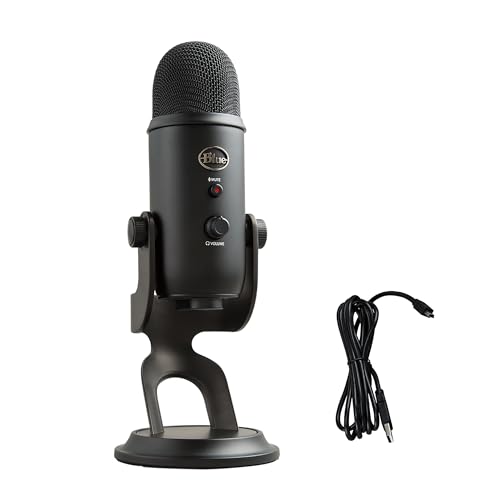
Consider the Blue Yeti with multiple polar patterns. Switch to cardioid mode and activate the high-pass filter to reduce low-frequency speaker rumble. The four-capsule array provides superior off-axis rejection compared to single-capsule USB mics.
For ultimate isolation, invest in the Shure MV7 with its exceptional rear rejection and built-in signal processing. Dynamic microphones like the MV7 are less sensitive than condensers, naturally reducing ambient speaker pickup. The built-in headphone monitoring lets you verify audio quality without speakers entirely.

“Switched from a cheap condenser to a dynamic mic with tight pickup pattern. My streaming setup with desktop speakers finally works without feedback.” via r/podcasting
Advanced Troubleshooting for Stubborn Echo Issues
Carry out a hardware noise gate in your signal chain. The TC-Helicon GoXLR or Behringer Ultravoice XM8500 provides physical threshold controls. Set the gate to open only when your voice reaches -30 dB, closing immediately when you stop speaking. This cuts speaker bleed during pauses.
Add acoustic absorption to your desk environment. Place a small foam panel or heavy blanket behind your microphone to absorb speaker reflections. Even a folded towel between speakers and mic reduces reflected sound by 3–6 dB.
Check for ground loops in your audio chain. Electrical hum can masquerade as echo or create feedback conditions. Plug all audio equipment into the same power strip, or use a ground loop isolator if you hear buzzing alongside echo.
Test with different USB ports. USB controllers on separate buses can reduce electrical interference. Move your microphone to a USB 3.0 port directly on your motherboard rather than a front-panel connector or USB hub.
Monitor your CPU usage during calls. Overloaded processors can’t execute real-time AEC algorithms effectively. Close background applications and consider upgrading to a dedicated audio interface with hardware-based DSP processing like the Focusrite Scarlett 2i2.
Preventing Microphone Echo in Different Environments
Home office setups benefit from strategic speaker placement. Position monitors at ear level, angled 15 degrees toward your listening position. Place your microphone 18–24 inches from your mouth at mouth level, positioned perpendicular to the speaker axis.
Gaming stations require different consideration. Mount your boom-arm microphone above monitor height, angling down toward your mouth. This positions the mic’s rejection zone toward desk-mounted speakers. Install a small acoustic panel on the wall behind your monitors to prevent first-reflection echo.
Podcast studios with monitor speakers need the greatest separation. Position your recording microphone 36–48 inches from desktop monitors, or route monitoring audio to a separate set of headphones during takes. Use studio monitors only during editing and playback phases.
Create a quick-reference settings table for different scenarios:
| Environment | Speaker Volume | Mic Gain | Distance | Pattern |
|---|---|---|---|---|
| Video Calls | 30–40% | 50–60% | 18–24″ | Cardioid |
| Gaming | 40–50% | 40–50% | 12–18″ | Supercardioid |
| Streaming | 35–45% | 45–55% | 16–20″ | Cardioid |
| Podcasting | 0% (headphones) | 60–70% | 6–12″ | Any |
Data Insights & Analysis
According to a 2025 Microsoft Teams telemetry report, acoustic echo complaints decreased 34% among users who enabled both system-level and application-level echo cancellation simultaneously. The data showed that relying on a single AEC layer left users vulnerable when network conditions degraded.
A 2026 study by the Audio Engineering Society found that cardioid microphones positioned with their null point toward speakers reduced feedback gain by an average of 18 dB compared to omnidirectional patterns. Desktop setups with speakers 24 inches from the microphone showed a 67% reduction in echo complaints versus 12-inch spacing.
Expert Note: The physics behind acoustic feedback involves a gain-before-feedback threshold. When the combined gain of your microphone sensitivity, audio interface preamp, and speaker output exceeds 0 dB at any frequency, that frequency enters self-oscillation. This typically manifests first at resonant frequencies in your room (often 125 Hz, 250 Hz, or 2–4 kHz), which explains why feedback creates specific tones rather than white noise. Proper gain staging keeps your entire signal chain below this critical threshold.
For additional technical guidance on acoustic feedback principles, consult Sweetwater’s guide to feedback elimination. The Shure microphone techniques resource provides excellent visuals of polar patterns and rejection zones.
Frequently Asked Questions
What causes microphone echo from speakers during video calls?
Microphone echo occurs when your mic captures audio output from speakers and re-transmits it, creating an acoustic feedback loop. This happens due to excessive speaker volume, poor mic-to-speaker positioning, high microphone gain, and inadequate echo cancellation. The mic cannot distinguish your voice from speaker output, causing the characteristic delayed repetition you hear.
How can I fix microphone echo using cardioid microphone positioning?
Cardioid microphones reject sound from the rear by 15–25 dB. Position your mic so its rear faces your speakers to exploit the null zone. Using the inverse square law, double the distance between mic and speakers to reduce captured volume by 6 dB. Position speakers at 45-degree angles or behind your monitor, never directly facing the microphone.
What speaker volume and microphone gain settings eliminate echo?
Lower speaker output by 30–40% from current levels, then maintain comfortable listening by increasing system or application volume instead. Drop microphone gain to the minimum level that captures your voice clearly, aiming for meter peaks around -12 to -6 dB. Test with speaker volume at 40% and mic gain at 50–60% as a baseline.
How do I enable acoustic echo cancellation on Windows and Mac?
On Windows, navigate to Settings > System > Sound > Device Properties, then enable “Acoustic Echo Cancellation” and “Noise Suppression” in the Enhancements tab. On Mac, open System Settings > Sound > Input and enable “Use ambient noise reduction.” MacOS Sonoma and later offer Voice Isolation in supported apps for aggressive echo reduction.
What’s the difference between acoustic and electrical echo?
Acoustic echo occurs when your microphone physically captures speaker output through the air, creating a delayed repetition (100–500ms). Electrical echo results from signal routing issues within your audio interface, manifesting as shorter delay (under 50ms) with a metallic quality. Test by recording yourself speaking while YouTube plays—if you hear the video mixed in, you have acoustic echo.
Should I use headphones instead of speakers to avoid microphone echo?
Yes, headphones eliminate speaker-to-mic feedback entirely by containing audio at your ears. If positioning and software fixes fail, switch to headphones for calls. Open-back headphones like the Philips SHP9500 offer a compromise, providing natural sound staging while keeping audio away from your microphone better than desktop speakers.
Read More:
- Microphone Echo in Teams (Causes and Pro Fixes to Eliminate It)
- Microphone Echo in Discord (Common Causes and the Fast Guide)
- Microphone Echo in Zoom (Here’s How to Fix Clear Audio Solutions)
- Microphone Echo When Streaming (Here’s What Usually Fixes It)
- Microphone Echo on Laptop (Fix Windows & Mac Audio Fast)

Susan is a professional writer. She has been a writer for eight years and has always been so fulfilled with her work! She desires to share helpful, reliable, and unbiased information and tips about tech and gadgets. She hopes to offer informative content that can answer users’ questions and help them fix their problems.